

CA-27 #412296
Since 1980
Local team. No pressure. No spam.
Orangevale homeowners with steep backyard slopes lose usable land and soil to erosion every year. Rain washes away topsoil, kills plants, and pushes the problem closer to your fence line or foundation. Terraced hillside wall systems in Orangevale, CA give you a way to fight back and put that wasted slope to work.
This page covers how these systems work, what materials fit your yard, and what to expect during the build. You will learn the process and key decisions before any work begins.
A licensed landscaper builds walls that hold soil, add planting space, and boost curb appeal across every terrace level.
Concrete blocks, natural stone, and timber each work for terraced hillside wall systems in Orangevale. The best choice depends on slope steepness, soil type, and your budget. Concrete blocks offer the longest life and the strongest hold on steep grades.
Talk to your contractor about which option fits your Orangevale property before work begins.
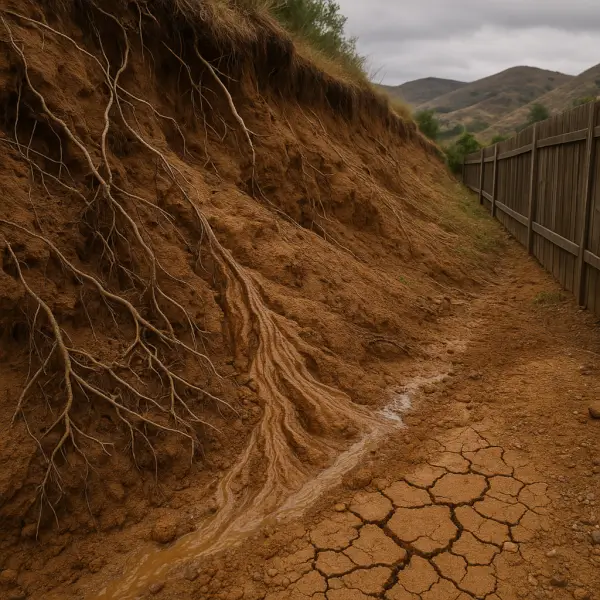
If your backyard drops off sharply, you are losing ground every year. That is not a figure of speech. Rain washes soil downhill, plants lose their roots, and your usable yard gets smaller season after season. Orangevale sits on foothill terrain where clay-heavy soils shift and slide during winter rains. That combination of steep grade and sticky clay makes erosion move fast once it starts.
Active erosion often shows up close to your foundation or fence line first. You might see dirt piling against a fence post or a gap forming under a patio slab. These are warning signs that soil is on the move. Catching them early gives you time to act before the damage gets expensive.
Slope angle controls how many terrace walls a project needs. A gentle slope may only need one or two low walls. A steep drop could require three or more tiers to hold the hillside in place. Steeper angles mean more force pushing downhill, so each wall must be sized to handle that load.
Soil movement leaves clues you can spot on your own. Look for cracks in bare ground, especially after dry spells. Watch for plants that lean downhill or flower beds that seem to creep away from where you planted them. These signs mean the ground beneath is shifting, not just the surface.
Flat or gently graded yards handle rain much better than raw slopes. Water spreads out and soaks in instead of racing downhill. On an untreated slope, runoff picks up speed, strips away topical nutrients, and kills the plants you worked hard to grow. Research from the UC Davis Soil Health program confirms that surface runoff on sloped ground suspends and carries away topsoil with every rainfall event – one of the primary drivers of residential soil loss in foothill communities like Orangevale. Terraced walls break that cycle by turning one steep slope into several flat, stable levels.
The material you pick today decides how your walls perform 20 or 30 years from now. Each option has clear trade-offs in strength, cost, and appearance. Knowing those trade-offs before you sign a contract saves you money and headaches down the road.
Concrete blocks give you the strongest hold on steep grades. They lock together with pins or lips and resist the clay-heavy soil movement common in Orangevale. They also handle wet winters and dry summers without cracking or rotting. If your slope is steep, concrete blocks are the safest bet.
Natural stone adds character that fits the foothill landscape around town. It costs more per square foot and takes longer to install. But it blends with garden plantings and ages well over time. Natural materials improve long-term property value in residential settings.
Timber costs less up front but breaks down faster. Wet winters soften wood, and hot Orangevale summers dry it out. Expect a shorter life span and more frequent repairs compared to block or stone.
Here is a quick comparison to help you weigh your options:
Material | Expected Life Span | Best For |
Concrete Blocks | 30 to 50 years | Steep slopes, heavy clay soil |
Natural Stone | 25 to 50 years | Garden terraces, visual appeal |
Timber | 10 to 20 years | Low slopes, tight budgets |
No matter which material you choose, every wall needs a drainage layer behind it. Even a two-foot wall can fail if water builds up with no way out. Gravel backfill and perforated pipe protect every tier in the system.
Shorter walls stacked in tiers hold soil better than one tall wall. A series of three-foot walls spreads the load across each level. That design also gives you flat planting beds between each tier. Homeowners near the Hazel Avenue corridor in Orangevale often have multi-tiered lots that benefit from this layered approach.
Always choose a licensed landscaper who pulls permits and follows Sacramento County building codes. Permits protect you if something goes wrong. They also confirm the design meets local setback and height rules.
Good prep work saves you time, money, and headaches once your crew shows up. A few steps handled before installation day keep the project moving without delays. Here is what you need to do before any dirt gets moved.
Check permit requirements with Sacramento County first. Most Orangevale projects require a grading or building permit when walls exceed a specific height. Your contractor can handle the application, but you should confirm this early. Waiting until mid-project to pull a permit stops everything and adds weeks to your timeline.
Call 811 to mark all underground utility lines. Gas, water, electric, and cable lines run through many Orangevale yards. Digging into one of these lines creates a dangerous situation and an expensive repair bill. This call is free and takes about two business days. Never let anyone dig on your property without marked lines.
Clear the slope of loose vegetation and debris. Remove brush, dead plants, and any objects sitting on the hillside. The crew needs a clean surface to survey grades and set layout stakes. Overgrown slopes hide rocks and roots that slow down excavation work. You can handle this yourself or ask your contractor to add it to the scope.
Open up equipment access through your property. Skid steers and compact excavators need a path at least six feet wide to reach your slope. Move patio furniture, potted plants, and anything blocking side gates or yard entries. If fencing limits access, talk to your contractor about temporary panel removal.
Discuss the drainage plan before a single block gets placed. Every terrace wall needs water management behind it. Ask your contractor where perforated pipe will run and where outlets will exit. Drainage is the number one cause of failure. Getting this plan on paper before day one protects your investment for decades.
Every terraced wall project follows the same basic order. Work always starts at the bottom of the slope. Crews build the lowest wall first, then move upward one terrace at a time. This bottom-up method keeps each level stable before the next one goes in. Skipping this order puts the whole system at risk of shifting under its own weight.
Here is what happens during a typical installation:
A typical residential project in Orangevale takes one to three weeks. Slope size, number of walls, and material choice all affect the timeline. Proper base preparation and drainage are the two biggest factors in long-term retaining wall performance.
Dry summers in Orangevale bake the clay soil hard and make digging slow and expensive. Fall and early spring give crews the best ground conditions. The soil is moist enough to dig but firm enough to compact well. Scheduling your project in these windows saves time and keeps costs lower.
Your terraced walls should look straight, drain well, and sit on solid ground. A quick walk-through after the project wraps up tells you a lot. You paid for quality work, and a few simple checks confirm you got it.
Walk each terrace level from end to end. Look for gaps between blocks or stones. Check for leaning sections or courses that sit unevenly. Run your hand along the wall face and feel for spots that stick out or dip in. Even small misalignments can signal a base problem that grows worse over time.
Test drainage outlets after the first rain. Water should flow out of the pipe exits behind each wall and away from the structure. If water pools at the base or seeps through the wall face, the drainage system needs attention right away. Trapped water is the number one reason retaining walls fail early.
Ask your contractor to show you the gravel backfill and perforated pipe behind each completed wall. A proper installation includes a layer of clean gravel at least 12 inches wide and a pipe that runs the full length of the wall. These parts stay hidden once the project finishes, so ask for photos taken during construction.
Confirm the base of each wall sits below grade on compacted, undisturbed soil. A shallow footing shifts when wet soil expands underneath it. Your contractor should have dug down to stable ground before placing the first course.
Request a final inspection sign-off from Sacramento County if a permit was pulled for the project. In the Citrus Heights-adjacent areas of Orangevale, inspectors check that walls meet setback rules from property lines. That sign-off protects you if you ever sell the home or refinance. Keep a copy of the permit and the inspection report with your property records.
Your terraced walls will hold strong for 20 years or more with basic care. But ignoring small problems leads to big, expensive repairs. Orangevale’s hot, dry summers and wet winters create stress cycles that wear on wall joints over time. These seasonal swings act like a slow version of freeze-thaw damage. Each cycle opens tiny gaps a little wider. A simple yearly routine keeps those gaps from turning into failures.
Clear every drainage outlet each fall. This is the single most important task you can do. Winter rains in Orangevale push water into the soil behind your walls. If outlets are clogged with leaves or dirt, water pressure builds up fast. That pressure pushes against the wall from behind and can cause bulging or collapse. Walk the base of each terrace and make sure water flows freely from every pipe opening.
Keep aggressive tree roots away from wall faces. Trees like willows, maples, and certain oaks send roots straight toward moisture behind walls. Those roots pry apart blocks and stones over time. Plant large trees at least 10 feet from any wall face. Shrubs and ground covers with shallow roots work great on terrace beds instead.
Inspect your walls every spring. Look for shifted blocks, cracked mortar joints, or soil pushing through gaps. Even a quarter-inch shift tells you something is moving underground. Catching it early means a simple repair. Waiting a year could mean rebuilding an entire section. Early detection reduces long-term repair costs across all wall types.
Avoid heavy loads near wall edges. Do not park vehicles, trailers, or heavy equipment on terrace levels close to the wall face. Large planters filled with wet soil also add weight you might not expect. That extra load pushes down on the retained soil and increases pressure against the wall. Keep heavy items at least three feet from any edge. A little space goes a long way toward protecting your investment in Orangevale’s foothill terrain.
A terraced hillside wall system in Orangevale typically costs between $25 and $75 per square foot of wall face, depending on material choice, slope steepness, and the number of tiers required. Concrete block systems fall in the mid range, while natural stone runs higher. Your final price also depends on excavation difficulty, drainage complexity, and permit fees. A licensed landscaper can visit your property, measure the slope, and give you a detailed written estimate before any work begins.
Building terraced walls on a residential slope in Orangevale generally takes one to three weeks from start to finish. The timeline depends on the number of terrace levels, the material you select, and the overall length of each wall. Permit approval can add a few extra days if Sacramento County requires a grading review. Fall and early spring offer the best scheduling windows because the soil is easier to excavate and compact during those seasons.
You likely need a permit to build terraced retaining walls in Orangevale, especially when any single wall exceeds four feet in height or when grading changes the natural drainage pattern. Sacramento County handles permit applications for residential projects in the Orangevale area. Your contractor can submit plans and manage the approval process. Having a permit on file protects you during future home sales, inspections, and insurance claims. Always confirm requirements before construction starts.
Terraced walls can absolutely be added to an existing landscaped slope in Orangevale. Your contractor will evaluate the current plantings, irrigation lines, and soil conditions before designing the terrace layout. Some existing plants may need temporary relocation while excavation and wall construction take place. Irrigation systems often require rerouting to serve each new terrace level. Working with a licensed landscaper ensures the new walls integrate with your current yard design and drainage without damaging what you already have in place.
Serving: Orangevale, Fair Oaks, Folsom, Roseville, Rocklin, Granite Bay, Citrus Heights, Rancho Cordova, Elk Grove, Auburn, Lincoln, Fairfield, El Dorado Hills, and Beyond