

CA-27 #412296
Since 1980
Local team. No pressure. No spam.
Many Orangevale homeowners deal with sloped yards and eroding hillsides that need real solutions. When soil washes downhill after every rain, the problem only gets worse. Boulder and natural rock walls in Orangevale, CA give your yard the strength it needs to hold firm.
This page covers boulder and natural rock wall installation for residential properties in Orangevale. You will learn what to expect from the process, from planning to final inspection.
A skilled Orangevale landscaper can turn a problem slope into a beautiful and stable feature. The right wall protects your yard and adds lasting value to your home.
A professionally installed boulder retaining wall in Orangevale can last 50 years or more. Natural rock does not rot, rust, or crack under normal conditions. Proper drainage and good base preparation are the biggest factors in long-term strength.
Your Orangevale property deserves a wall that holds strong through every season.
Your yard will tell you when something is wrong. You just need to know what to look for. Slopes do not fail overnight. They send warning signs for months or even years before real damage happens. Catching these signs early saves you money and protects your property from bigger problems down the road.
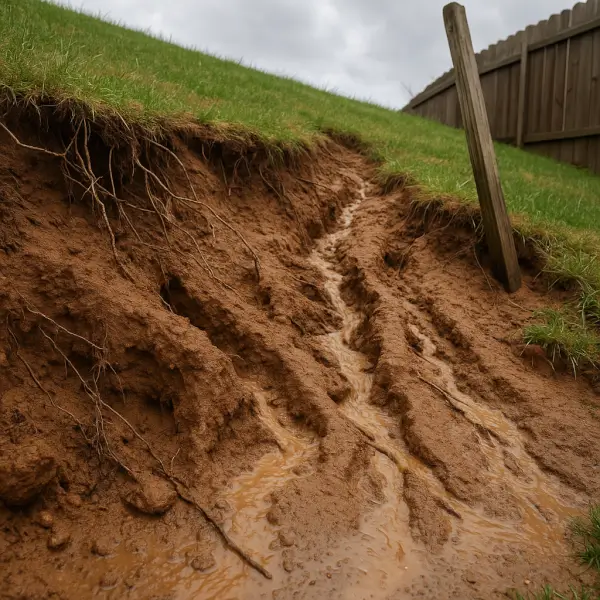
Soil washing downhill after rain is one of the clearest red flags. If you see bare dirt trails or mud collecting at the bottom of a slope, the ground is moving. That soil carries nutrients away from your plants and deposits sediment where you do not want it. Every rainstorm makes it worse.
Uneven terraces or sunken lawn areas point to shifting ground beneath the surface. You might notice a dip in your grass that was not there last year. Or a flat section of yard that now tilts slightly. These changes happen slowly, but they mean the soil underneath is compacting or sliding.
Tree roots or plant beds sliding toward the fence signal a deeper issue. When root balls shift position, the soil holding them has lost its grip. This is common on properties near Pond Road and Hazel Avenue in Orangevale, where rolling terrain speeds up erosion without proper support.
Watch for these additional warning signs around your yard:
If you spot two or more of these signs, your slope needs professional attention. A boulder retaining wall stops the movement and gives your yard a permanent fix. The longer you wait, the more soil you lose and the more expensive the repair becomes.
When you compare wall materials side by side, natural boulders win on almost every measure. Timber walls look fine at first but start rotting within 10 to 15 years. Concrete block walls work but often feel out of place in a natural yard setting. Boulders give you strength, drainage, and beauty all in one material.
The biggest advantage is pure mass. A single boulder can weigh several thousand pounds. That weight alone holds back soil without mortar, hardware, or concrete footings. Gravity does the heavy lifting for you. This means fewer parts that can fail over time and lower long-term repair costs.
Natural rock also handles water better than most other wall materials. Gaps between boulders let groundwater pass through instead of building up behind the wall. Natural rock also handles water better than most other wall materials. Gaps between boulders let groundwater pass through instead of building up behind the wall. That built-in drainage reduces hydrostatic pressure behind the wall – one of the leading causes of retaining wall failure during heavy rain. Solid wall types like poured concrete trap water and need extra drain systems to stay safe.
In Orangevale, local granite and river rock fit the natural foothill look that many neighborhoods already have. A boulder wall does not stand out like a gray block wall next to oak trees and native grasses. It blends right in. That natural appearance adds real curb appeal and can raise your property value when it comes time to sell.
Here is how boulders stack up against other common wall materials:
Feature | Boulders | Timber | Concrete Block |
Lifespan | 50+ years | 10-15 years | 25-40 years |
Natural drainage | Yes, through gaps | No | No |
Chemical treatment needed | None | Yes | No |
Blends with landscape | Excellent | Moderate | Poor |
Maintenance level | Very low | High | Moderate |
Choosing boulders means choosing the material that works hardest and lasts longest. You get a wall that looks like it belongs in your yard from day one. You also skip the cycle of replacing rotted wood or patching cracked block every few years. For Orangevale properties, natural rock is a smart long-term investment.
A little planning before day one saves you time, money, and headaches. Boulder wall projects involve heavy equipment, large material deliveries, and excavation work. When you handle a few key tasks ahead of time, the crew can start fast and stay on schedule.
Good preparation also means knowing your property lines. If your wall sits close to a neighbor’s fence, measure twice. A quick survey can prevent disputes later. Your contractor should walk the site with you before any work begins. That walkthrough is where you confirm the wall path, drainage plan, and equipment entry point together.
Knowing each step of the process helps you feel confident on installation day. Boulder wall projects follow a clear sequence. Each phase builds on the one before it. Skipping any step puts the whole wall at risk.
Excavation comes first. The crew digs into the slope and carves out a level trench for the base course. This trench must sit below grade so the bottom row of boulders has solid ground beneath it. The depth depends on your wall height and soil type.
A compacted gravel base goes down next. We spread crushed gravel into the trench and compact it in layers. This base keeps boulders from settling or shifting after placement. Without it, even heavy rocks will move over time. The [Centers for Disease Control and Prevention](https://epa.gov) recommend safe equipment practices on outdoor job sites, and we follow those guidelines on every project.
Large boulders are placed first using heavy equipment. An excavator or skid steer lifts each rock into position along the base course. The operator tilts each boulder slightly back toward the hillside. This lean adds strength and keeps the wall from tipping forward under soil pressure.
Smaller rocks fill the gaps between large boulders. These filler stones lock the bigger rocks together naturally. They also give the wall a finished look that blends with the surrounding landscape.
Drainage gravel or perforated pipe goes in behind the wall last. This layer sits between the backfill soil and the boulder faces. It gives water a clear path to flow down and out instead of pushing against the rock. We backfill and compact the soil in stages after the drainage layer is set.
In the Olive Grove neighborhood of Orangevale, tight lot lines sometimes require compact equipment to reach backyard slope areas. We plan equipment access before the job starts so your fence, plants, and neighbor’s property stay protected.
Your boulder wall looks great on day one. But a good-looking wall and a well-built wall are not always the same thing. A few simple checks tell you if the job was done right. Spending ten minutes on inspection now saves you thousands in repairs later.
Wall angle matters more than you think. The face of the wall should sit vertical or lean slightly back toward the hillside. This backward lean is called batter, and it helps the wall resist soil pressure over time. If the wall leans forward even a little, that is a red flag worth raising with your contractor right away.
Base contact should be tight and solid. Walk along the bottom of your new wall. You should not see large gaps between the base boulders and the ground beneath them. Gaps at the base mean soil can wash out from under the rocks. That leads to settling and shifting within the first year or two.
Drainage is the real test of quality. Water should move freely through or around the wall after a heavy rain. It should not pool behind the wall or push soil through the rock gaps. Orangevale gets heavy winter rain, so testing drainage after the first storm is a smart step every homeowner should take. Stand outside during that first downpour and watch how water behaves near the wall.
Backfill tells the hidden story. The soil behind your wall should feel firm and sit level with the surrounding grade. Sunken or soft backfill means the crew did not compact it properly. That loose soil will settle and pull away from the wall over time.
Ask for proof of what you cannot see. Request photos of the drainage gravel or pipe layer before your contractor buried it under backfill. A professional crew documents this step because they know it matters. If they did not take photos, ask why. The drainage layer does the hardest work in your wall, and you deserve to know it was installed correctly.
Your boulder wall will hold strong for decades with just a little attention each year. The good news is that natural rock needs far less upkeep than timber or concrete block walls. A few simple habits protect your investment and keep small issues from turning into big repairs.
Tree root management is the number one maintenance task for Orangevale homeowners. Oak trees common in the Fair Oaks and Orangevale area grow aggressive roots that can shift boulders over many years if left unchecked. Trim large roots that grow toward the wall before they gain enough force to move heavy stone. Talk to an arborist if a mature oak sits within 15 feet of your wall line.
Weed and vine control matters more than most people think. Vines creep into gaps between rocks and trap moisture against the stone face. That trapped moisture softens the soil behind the wall and adds pressure over time. Pull weeds and vines from the wall face at least twice a year, once in spring and once in fall.
Drainage protection keeps water from doing slow damage. Point all downspouts and gutter extensions away from the wall base. Concentrated water flow at the base erodes the compacted soil that holds everything in place. After heavy winter storms, walk along the wall and check for pooling or soft spots near the bottom.
Catching a small shift early costs far less than rebuilding a section later. A quick yearly walk along your wall is the easiest money you will ever save.
The cost of a boulder retaining wall in Orangevale depends on several factors including wall height, total length, site access, and the type of rock selected. Most residential projects range from moderate to significant investment based on the complexity of the slope and equipment needed. Larger walls requiring deeper excavation and more drainage work will cost more. We provide free on-site estimates so you get an accurate price based on your specific yard conditions before any work begins.
Whether you need a permit for a boulder retaining wall in Orangevale depends on wall height and location. Sacramento County typically requires permits for retaining walls over a certain height, and properties near the Citrus Heights border may face additional review. Your contractor should confirm permit requirements before any excavation starts. We handle the permit research and application process so you stay compliant with local building codes and avoid costly fines or project delays.
Installing a boulder retaining wall typically takes a few days to a couple of weeks for most residential projects in Orangevale. The timeline depends on wall size, slope difficulty, equipment access, and boulder supplier availability. Tight backyard lots in neighborhoods like Olive Grove may require compact equipment, which can add time. We set a realistic schedule during your estimate appointment so you know exactly what to expect from start to final inspection day.
The size of boulders used for retaining walls in Orangevale varies based on wall height and the amount of soil pressure involved. Base course rocks are typically the largest, often weighing several thousand pounds each, to anchor the wall firmly. Upper courses use progressively smaller stones. We select local granite and river rock that matches the natural foothill landscape of the Sacramento area. During your site visit, we recommend specific boulder sizes suited to your slope and soil conditions.
Serving: Orangevale, Fair Oaks, Folsom, Roseville, Rocklin, Granite Bay, Citrus Heights, Rancho Cordova, Elk Grove, Auburn, Lincoln, Fairfield, El Dorado Hills, and Beyond