

CA-27 #412296
Since 1980
Local team. No pressure. No spam.
Many Orangevale homeowners deal with sloped yards, eroding soil, and uneven terrain that needs proper support. Concrete block retaining walls in Orangevale, CA give your yard the structure it needs to stay put. Without a solid wall, soil keeps sliding and your usable space keeps shrinking.
This page covers how concrete block retaining walls work and what local homeowners can expect. You will learn what the process looks like and why professional installation matters here.
A skilled local landscaper can build a wall that holds soil, looks great, and adds real value to your property. The right wall changes how you use your yard.
A professionally installed concrete block retaining wall in Orangevale can last 50 years or more. Proper drainage, good base prep, and quality blocks make the biggest difference. Local soil and heat cycles can shorten wall life if installation is done wrong.
The right crew and materials give Orangevale homeowners a wall that holds strong for decades.
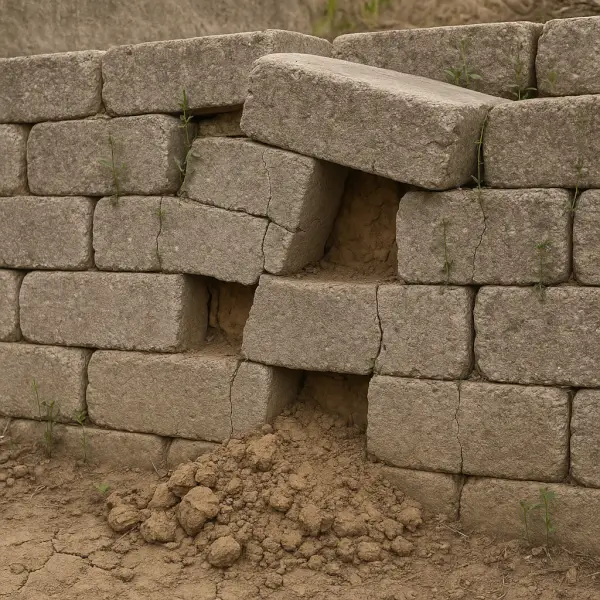
A retaining wall that starts to fail gives you warning signs early. The trouble is most homeowners do not know what to look for. By the time the problem is obvious, the fix costs much more than it should. Knowing these signs helps you act before a small issue turns into a full wall collapse.
Leaning or tilting blocks tell you the base layer was too thin or missing altogether. Without a solid gravel footing, the bottom row shifts under the weight above it. Once the base moves, every row above follows.
Cracks running across the wall face usually point to water pressure building up behind the blocks. When water has no way to escape, it pushes against the back of the wall with serious force. Over time that pressure splits blocks and pops joints apart.
Gaps opening between block rows mean the wall is settling unevenly. This happens when the trench was not dug to a uniform depth or the gravel was not compacted enough. You will notice these gaps grow wider after a heavy rain.
Soil spilling out at the base is a sign the foundation sits too high. The first course of blocks should sit below grade level. If it does not, dirt works its way under and around the bottom row.
Standing water pooling near the wall means drainage gravel or drain pipe was skipped during the build. Water needs a clear path away from the wall at all times.
Orangevale’s clay-heavy soils make all of these problems worse. Clay expands when it gets wet and shrinks when it dries out. That constant push and pull puts extra stress on walls built without proper footings. If your wall shows any of these signs, get a local contractor to take a look before the damage spreads.
Picking the right material saves you money and headaches down the road. Concrete blocks give you a strong wall at a lower price point than poured concrete. They show up to your job site ready to stack, which cuts labor time and keeps costs down. For most Orangevale yards, blocks deliver the best balance of strength, style, and budget.
Wood retaining walls might look nice at first. But timber rots, attracts termites, and breaks down fast under Sacramento Valley heat. Concrete blocks handle summer temperatures above 100 degrees without warping or cracking. They also stand up to wet winter months far better than any wood option. The National Concrete Masonry Association has published design and durability standards for segmental retaining walls since 1918 — and their research consistently shows concrete block outperforms timber by decades in hot inland climates like Sacramento Valley. Blocks simply outlast wood by decades in this region.
Poured concrete walls are strong but come with trade-offs. If a section of a poured wall cracks, the repair is expensive and messy. With a block wall, your contractor can remove and replace individual blocks without tearing out the whole structure. That makes future fixes faster and cheaper.
Feature | Concrete Blocks | Poured Concrete | Timber |
Upfront Cost | Lower | Higher | Lowest |
Lifespan | 50+ years | 50+ years | 10-20 years |
Repair Difficulty | Easy, block by block | Hard, full section | Moderate |
Heat Resistance | Excellent | Excellent | Poor |
Style Options | Many colors and textures | Limited without veneer | Few |
Pest Resistance | Full | Full | Low |
Blocks also come in dozens of colors, textures, and sizes. You can match your home’s look or create a natural stone appearance. In the Citrus Heights and Orangevale area, block walls are popular because they hold up well against summer heat and occasional wet winters. The small gaps between blocks let water pass through, which reduces harmful pressure behind the wall. That built-in drainage feature adds real structural value to your project.
A retaining wall project starts long before the first block hits the ground. Skipping the prep work leads to costly fixes, failed inspections, and walls that do not last. Every good project begins with paperwork, planning, and proper site evaluation.
Sacramento County requires a building permit for any retaining wall over four feet tall. Your contractor should handle the permit application for you. This step protects you from fines and from building a wall that does not meet local code. Orangevale properties near Folsom Road or the American River Parkway may face stricter grading rules. Those rules can limit wall height and placement on your lot.
Before any digging starts, a contractor will walk your property and study the slope. They check your soil type, measure grade changes, and plan for water drainage. Clay soil, loose fill, and bedrock all change how deep the base trench needs to go. Getting this wrong means the wall shifts or fails within a few years.
This prep phase usually takes one to two days for most Orangevale projects. Rushing through it creates problems that show up months later. A solid plan and proper permits give your wall the best start possible.
Knowing what happens on build day helps you plan around the work. A block retaining wall goes up in a set order. Each step builds on the one before it. Skipping or rushing any step weakens the whole structure.
Here is the process our crew follows from start to finish:
Most single-tier block walls in Orangevale take two to five days to complete. Wall length and site conditions affect that timeline. Steep slopes, difficult access, or extra wall height can add time. We keep you informed at each stage so there are no surprises.
Your new retaining wall looks solid from the street. But a quick visual check is not enough. You need to walk the entire wall and look at every detail before you sign off on the project. A careful inspection protects your investment and catches small problems while they are still easy to fix.
Level and alignment matter more than anything else. Run your eye along each row of blocks. Every course should sit flat and flush with the row below it. If you see a block that sticks out or dips in, ask your contractor to fix it right away. Even a small misalignment can grow into a bigger shift over time.
Drain outlets at the base need your attention next. Walk to the low end of the wall and find each drain pipe exit. Water should flow freely away from the wall, not pool near the foundation. If you see standing water or a blocked outlet, the drainage system needs correction before backfill covers everything up.
Gaps, cracks, and crooked blocks are red flags. Look closely at each joint between blocks. Tight, even spacing means the wall went up correctly. Wide gaps or hairline cracks in the block face could point to a settling issue or a block that took a hit during installation.
Backfill behind the wall should feel firm and even when you walk on it. Soft or sunken spots mean the gravel and soil were not compacted properly. Loose backfill lets water collect against the wall and adds pressure that the structure was not designed to handle.
Permit records and county sign-off are the final piece. Sacramento County inspectors sometimes conduct a final review for taller walls in Orangevale before the project is officially closed out. Ask your contractor for copies of every inspection record and the completed permit. Keep these documents with your home files. They matter if you ever sell the property or need warranty work done later.
Your new block wall will serve you well for years. But only if you give it a little attention each season. A few simple habits protect the money you spent and prevent small issues from turning into costly repairs. Think of it like changing the oil in your car. Regular checkups save you from a breakdown later.
Spring weed removal is the easiest task on the list. Pull weeds and small roots from the joints between blocks before they grow deep. Roots push blocks apart over time and create cracks that let water in. A quick pass each spring keeps joints tight and clean.
Drain outlet checks after heavy rain matter more than most homeowners realize. Walk to the base of your wall after a big storm. Look for water flowing out of the drain pipes. If nothing comes out or water pools near the wall, you likely have a clog. Blocked drains let water pressure build behind the wall. That pressure is the number one reason block walls fail early.
Watch for movement year-round. Any new tilting, shifting, or gaps between blocks need attention right away. Do not wait a season to see if it gets worse. Call a contractor the moment you spot something off. Early fixes cost a fraction of a full rebuild.
Point your sprinklers away from the wall. Irrigation water hitting the wall face or soaking the base adds moisture the drainage system was not designed to handle. Adjust your spray heads so they water your plants, not your blocks.
In the Fair Oaks and Orangevale area, mature oak trees create a specific risk. Their roots spread wide and grow strong enough to push blocks out of alignment. Check the soil near your wall each season for new root growth. If you see roots within two feet of the base, trim them or talk to an arborist about root barriers. A yearly inspection takes less than 30 minutes and gives you peace of mind all year long.
The cost of a concrete block retaining wall in Orangevale depends on wall height, total length, soil conditions, and site access. Most residential projects range from $25 to $45 per square face foot installed. Taller walls that require engineering, geogrid reinforcement, or extra drainage work land on the higher end. A contractor can give you an accurate estimate after visiting your property and measuring the slope. Getting multiple quotes helps you compare pricing and scope before committing to a project.
Building a retaining wall in Orangevale typically takes three to seven days from start to finish. The timeline depends on wall length, height, slope steepness, and whether permits require inspections at certain stages. Site prep and trench work usually take the first day or two. Block stacking and drainage installation fill the remaining days. Larger projects with tiered walls or difficult access may extend to two weeks. Your contractor should provide a clear schedule before work begins so you can plan accordingly.
You do need a permit for a retaining wall in Orangevale if it exceeds four feet in height, as required by Sacramento County building codes. Walls holding surcharge loads like driveways or structures may also require permits regardless of height. Your contractor should handle the application process, submit plans, and schedule any required inspections. Building without a permit can lead to fines and complications when selling your home. Always confirm permit requirements with your contractor before the project starts.
Hiring a contractor for your retaining wall in Orangevale is the safer and more reliable choice for most projects. Walls over two feet tall demand precise base preparation, proper drainage installation, and knowledge of local soil conditions. A professional understands Sacramento County permit requirements and builds to code. DIY attempts often lead to drainage failures, uneven settling, and premature wall collapse. For short garden borders under two feet, a DIY approach may work. For anything taller or structural, a licensed local contractor protects your investment.
Serving: Orangevale, Fair Oaks, Folsom, Roseville, Rocklin, Granite Bay, Citrus Heights, Rancho Cordova, Elk Grove, Auburn, Lincoln, Fairfield, El Dorado Hills, and Beyond