

CA-27 #412296
Since 1980
Local team. No pressure. No spam.
damage landscaping. A basic wall often fails under that pressure. Reinforced retaining walls in Orangevale, CA give your yard the strength it needs to hold firm through every season.
This page explains how reinforced retaining walls work, who needs one, and how to get started. You will learn what sets reinforced walls apart and why local soil and weather conditions matter.
A skilled Orangevale landscaper builds walls that protect your yard and add lasting value. We walk you through every step below.
A professionally built reinforced retaining wall in Orangevale can last 50 years or more. The right materials and strong drainage keep the wall stable through wet winters and dry summers. Proper installation is the biggest factor in long-term performance.
Talk to a local Orangevale contractor to get the most life out of your wall investment.
If your backyard slopes away from your house, gravity is working against you every day. Rain loosens the soil. Roots lose their grip. Over time, that hillside creeps downward and takes your landscaping with it. A basic stacked wall may look fine at first, but it cannot handle the weight of saturated earth pushing against it season after season.
Reinforced retaining walls in Orangevale solve this problem at the source. Steel rebar or geogrid layers are built into the wall as it goes up. These materials spread soil pressure across a much wider area instead of letting it concentrate in one spot. The wall does not just sit on the surface. It acts like a buried anchor tied deep into the ground behind it.
This design stops the three most common wall failures:
Orangevale lots near the American River Parkway sit on especially unstable hillside soil. After storms, that soil shifts and swells. A basic wall in that area will fail faster than homeowners expect. Reinforcement gives the wall the strength to handle those seasonal changes without moving.
The payoff goes beyond protection. Once the wall is in place, you gain flat usable yard space where a steep slope once stood. That means room for a patio, garden beds, or play area your family can actually use.
Not all retaining walls carry the same weight or last the same number of years. If you are comparing options for your Orangevale yard, the type of wall you pick will shape how it performs a decade from now. A reinforced wall handles loads that would crack, lean, or collapse a standard wall within just a few seasons.
Dry-stacked stone walls rely on gravity and friction alone. They work fine for short garden borders under two feet tall. But they cannot hold back a heavy slope of wet clay soil. Timber walls rot over time, even with pressure-treated lumber. Most wood walls in the Sacramento Valley start showing serious decay within 10 to 15 years. Concrete block with rebar gives you a rigid structure tied together from footing to cap. Steel inside the wall resists bending forces that would topple a plain block wall.
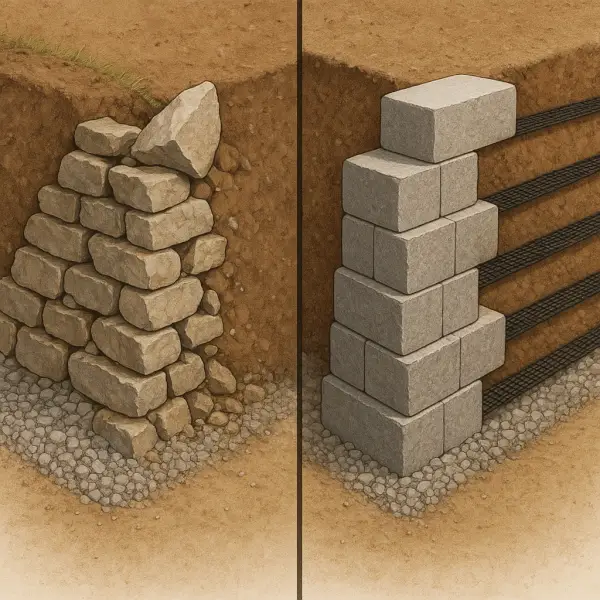
Segmental retaining wall blocks are one of the most popular choices for Orangevale homes. These interlocking concrete units stack without mortar and use geogrid layers for added strength. They flex slightly during seasonal soil movement without cracking. That small amount of give is a big advantage in our local ground conditions. Research published in Scientific Reports confirms that connecting geogrid backfill material to a retaining wall efficiently reduces lateral pressure on the wall, especially where there is a surcharge load at the top of the embankment — making geogrid-reinforced segmental systems the better choice over rigid poured alternatives on sloped Orangevale lots.
Poured concrete walls offer the strongest single-pour option available. They work best for tall walls or commercial projects where maximum strength matters. For most residential yards in Orangevale, segmental block with geogrid reinforcement hits the best balance of strength, cost, and appearance. Your final choice depends on three things: how tall the wall needs to be, what type of soil sits behind it, and how you plan to use the space above and below.
Skipping permits or site prep causes delays, fines, and failed walls. Every reinforced retaining wall project in Orangevale starts with paperwork and planning before any digging happens. This upfront work protects your investment and keeps the project on schedule.
Sacramento County requires a building permit for most retaining walls taller than 30 inches. The permit process includes plan review and at least one inspection during construction. Building without a permit can result in fines or a forced teardown. Your contractor should handle the permit application as part of the project scope.
A licensed surveyor marks your property lines before the crew breaks ground. This step prevents you from building on a neighbor’s land by mistake. It also shows the exact slope grade so the engineer can size the wall correctly. Survey costs are small compared to a boundary dispute later.
Soil testing tells the contractor what is underground. Different soil types need different reinforcement methods. Sandy soil drains fast but shifts easily. Clay soil holds water and puts more pressure on the wall. A simple soil report guides every decision from footing depth to drainage design. Soil composition is one of the top factors in retaining wall performance.
Underground utility checks are not optional. Gas lines, water mains, and buried cables run through many Orangevale yards. A free 811 call marks all utility locations before digging starts. Hitting a gas line is dangerous and expensive.
Grading and drainage planning wraps up the prep phase. Properties along the Hazel Avenue corridor often need extra drainage assessments. Runoff from these lots flows toward neighboring properties, so the wall design must route water safely. Your contractor plans pipe placement, gravel layers, and surface grading before setting the first block.
Knowing what happens on build day takes the stress out of the project. When you hire a qualified crew, each phase follows a clear order. Here is how we build a reinforced retaining wall from the ground up.
Most residential walls in Orangevale are finished within three to seven days. Orangevale summers are hot and dry, so our crews schedule concrete work in the early morning. This prevents rapid curing that can weaken joints. Curing temperature directly affects concrete strength. Morning pours give us cooler conditions and a stronger finished wall for your yard.
Your new retaining wall should look right and perform right from day one. You do not need a degree in retaining wall types to spot problems early. A few simple checks help you confirm the work was done well. Catching small issues now saves you from big repairs later.
The wall face should sit plumb or lean slightly backward. That small backward lean is called batter. It helps the wall push back against soil pressure. If the wall leans forward at all, something went wrong during construction. Stand back about ten feet and look at the wall from the side to check this.
Drainage outlets at the base should flow freely after rain. Walk the length of the wall after the next storm. Water should drip or trickle out of the weep holes near the bottom. If water pools behind the wall instead, the drainage system may be blocked or missing.
No gaps, cracks, or shifted blocks should show up in the first few months. A well-built reinforced wall stays tight and even. Hairline settling is normal, but visible cracks or blocks that stick out are not. Take photos right after the project ends so you have a baseline to compare.
Backfill behind the wall should compact evenly with no sinkholes. Walk across the soil behind the wall. It should feel firm and level. Soft spots or dips mean the fill was not compacted in proper layers.
Your contractor should walk you through the finished work before you make final payment. Ask about the drainage setup, the type of reinforcement used, and what to watch for going forward. After the first rainy season in Orangevale, check every drainage outlet for debris and soil wash. Early attention keeps your wall standing strong for decades.
Your reinforced retaining wall will serve you for decades. But only if you take care of it. A few small tasks each year prevent expensive repairs down the road. The good news is that most of this work takes less than an hour.
Drainage is the number one thing to protect. Water pressure behind the wall causes more damage than anything else. Each fall, before the rainy season hits, clear out your weep holes and drainage pipes. Leaves, dirt, and debris build up fast. If water cannot flow out the bottom, it pushes against the wall from behind. That pressure can crack blocks and shift the entire structure over time.
Tree roots are a hidden threat in Orangevale. Oak trees common in the area near Fair Oaks Boulevard send deep roots that can shift wall footings over time. If you see roots growing near the base of your wall, remove them early. Waiting too long gives them the chance to wedge between blocks or lift the footing. You do not need to remove the whole tree. A root barrier or targeted root pruning often solves the problem.
Small cracks deserve quick attention. Fill any hairline cracks with masonry sealant as soon as you spot them. A tiny crack lets water seep in. Water freezes, expands, and turns a small crack into a big one. Catching it early costs a few dollars. Ignoring it can cost thousands.
Keep large shrubs and heavy plants at least two feet away from the wall face. Their roots and weight add pressure you do not need. Stick to low ground cover or small ornamental grasses near the wall.
Schedule a professional inspection every three to five years. A trained eye catches settling, hidden drainage problems, and structural shifts that you cannot see from the surface. This one step protects everything you invested in the wall from day one.
The cost of a reinforced retaining wall in Orangevale depends on wall height, total length, soil conditions, and materials selected. Most residential projects range from $50 to $150 per square foot of wall face. Taller walls requiring engineered plans and deeper footings cost more. Segmental block with geogrid reinforcement typically falls at the mid-range, while poured concrete sits higher. Request an on-site estimate for accurate pricing because every lot in Orangevale has different slope and soil challenges.
Yes, you typically need a permit for a retaining wall in Orangevale if the wall exceeds 48 inches in height. Sacramento County requires plan review and at least one inspection during construction. Building without a permit can lead to fines or even a required teardown. A qualified contractor handles the full permit application as part of your project scope, so the process stays on track and compliant with local building codes from start to finish.
Choosing the right contractor for a retaining wall in Orangevale starts with verifying their California contractor license and checking for active liability insurance. Ask for photos of completed reinforced wall projects in the Sacramento area. A reliable contractor will handle permits, coordinate soil testing, and explain the reinforcement method they plan to use. Get at least three written estimates that detail materials, drainage plans, and timelines. Avoid any contractor who skips the permit process or rushes site preparation.
The best material for a retaining wall in Orangevale depends on your specific soil type and wall height. Segmental concrete blocks with geogrid reinforcement work well for most residential slopes because they handle seasonal soil movement without cracking. Poured concrete with steel rebar suits taller walls or lots with heavy clay that holds water. Sandy and loamy soils common across parts of Orangevale drain faster but shift more, making geogrid layers especially effective at distributing pressure evenly behind the wall.
Serving: Orangevale, Fair Oaks, Folsom, Roseville, Rocklin, Granite Bay, Citrus Heights, Rancho Cordova, Elk Grove, Auburn, Lincoln, Fairfield, El Dorado Hills, and Beyond