

CA-27 #412296
Since 1980
Local team. No pressure. No spam.
Your yard should stay green through hot Orangevale summers without draining your wallet. Native plant landscaping in Orangevale, CA gives you color, shade, and curb appeal while cutting water use and weekend chores.
A skilled local landscaper can turn tired turf into a low-maintenance, water-smart space. We match plants to your soil, sun, and slope so everything thrives with less effort.
This page walks you through what professional native plant landscaping looks like, from the first yard visit to the finished install and healthy growth in your first season.
You want lush, productive garden beds that fit your sunny yard and busy life. Most Orangevale homeowners picture fresh tomatoes and herbs steps from the kitchen, not soggy soil or warped wood a year later.
Our garden bed installation in Orangevale, CA handles the hard parts for you. We size the beds, pick the right wood, and build them to hold up through hot Sacramento foothills summers.
This page walks you through what happens before, during, and after your beds go in. You will know what to expect every step.
Orangevale sits in a Mediterranean climate zone with hot, dry summers and mild, wet winters. Fall and early winter are the best times to plant natives for native plant landscaping in Orangevale, CA. Cool soil helps roots grow before summer heat arrives.
Ask your landscaper which mix fits your yard’s sun and soil.
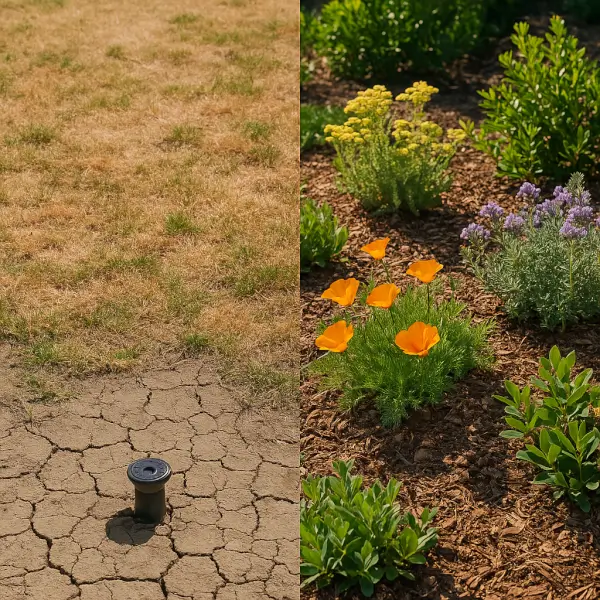
If your lawn turns brown every July, the grass is not the problem. The wrong plants for this climate are. Orangevale gets about 20 inches of rain per year, and nearly all of it falls in winter. That leaves a traditional lawn thirsty and dependent on your sprinklers from May through October.
You end up paying for water your yard cannot hold. Clay-heavy soils across Orangevale drain poorly, so water either pools on top or runs off before roots can use it. Non-native grass roots stay shallow and cannot reach moisture deeper down.
Here are the real costs most homeowners face with a standard lawn:
A lawn is a system that fights the local climate. You feed it, water it, cut it, and treat it just to keep it alive. Native plantings work with Orangevale’s weather instead of against it.
Once you see the full picture, the math gets easier. Less water, less labor, and a yard that actually looks good in August. That is the shift we help you make.
The upfront cost of a native install can feel bigger than another round of sod. The long-term math tells a different story. Once your native plants settle in, your water bill drops, your weekends open up, and your yard looks better than the grass ever did.
Here is how the investment pays you back:
Cost Area | What Changes with Natives |
Monthly water bill | Drops sharply once plants are established |
Fertilizer and pesticides | Little to none needed on true natives |
Equipment and fuel | No weekly mowing or reseeding supplies |
Curb appeal | Year-round color and texture in water-smart California markets |
Property value | Often rises in drought-aware neighborhoods |
We usually design yards using a 70/30 planting ratio. That means 70 percent California natives and 30 percent complementary plants that handle the same conditions. You get variety, bloom across seasons, and a yard that still reads as low-water.
Rebates also help close the gap. The Sacramento Municipal Utility District and local water agencies serving Orangevale have offered turf removal rebates that offset part of the upfront cost. Global trends tracked by international trade and sustainability groups point to rising water costs, which makes a water-smart yard a smart long-term play.
Ask us to price a native install against five more years of lawn care. We will show you the side-by-side numbers for water, maintenance, and replacement. Most Orangevale homeowners break even inside a few seasons, then keep saving every year after that. The yard you want and the bill you want can be the same project.
Timing changes everything with native plants. Install in the wrong season and you fight heat, dry soil, and stressed roots from day one. Install in fall and the weather does most of the hard work for you.
Cool fall soil holds warmth longer than the air above it. That warm soil plus cooler days lets roots grow fast without the plant losing moisture through its leaves. By the time summer returns, your plants have months of root depth behind them.
Here is the schedule we recommend for Orangevale and Carmichael yards:
You can save time and money by prepping before we arrive. Clear the project zone of weeds, old turf chunks, and debris. Move any pots, hoses, or yard furniture out of the work area. If you have an old irrigation system, let us know which zones feed the space so we can cap or adjust lines.
One planning note for late bookers: if you miss the fall window, early winter still works. Just do not wait until spring. By April, the soil dries out and summer stress starts before roots are ready.
Most homeowners want to know what install day actually looks like. We keep the process clear so you know what to expect from the first truck arrival to the final cleanup.
Here is how a typical install runs in your Orangevale yard:
Most residential jobs finish in one to three days. Yard size, demo work, and access all affect the timeline. We give you a firm estimate during the planning visit.
Many Orangevale yards also get decomposed granite paths during install. DG drains well after rain, matches the foothill look, and gives you clean walking surfaces between planting beds. It is a smart finish that ties the whole design together.
After install day, you want to know your plants are settling in. The good news is healthy natives show clear signals in the first few weeks. You do not need a horticulture degree to read them.
Watch for these signs in your first season:
A good landscaper does not just plant and leave. We schedule a follow-up visit four to six weeks after install. That check lets us catch any weak plants early, adjust your watering schedule, and top off mulch where it has thinned.
In the Fair Oaks and Orangevale corridor, natives often push their first bloom flush in late winter or early spring. When you see buckwheat, ceanothus, or manzanita flowering that first season, you know the yard is on track.
If anything looks off, call us. Early intervention is cheap and easy. Waiting costs you plants.
Once your native yard settles in, the care list gets short. A few simple habits each year keep the plants healthy, the beds clean, and your investment protected for the long haul.
The biggest shift is how you think about water. For the first two summers, water deeply but not often. Long soaks push roots down, while short daily sprays keep roots shallow and weak. By year three, most Orangevale natives need zero to minimal irrigation from July through September. Warm, dry summers here reward deep-rooted plants that can find their own moisture.
Here is the yearly rhythm we teach every homeowner:
That is the full list. No mowing, no reseeding, no weekly feeding schedule.
If a plant ever looks stressed, check water first, then mulch depth, then sun exposure. Most issues trace back to one of those three. Call us any time you want a second set of eyes on your yard.
The cost of a native plant landscaping project in Orangevale depends on yard size, turf removal needs, soil prep, and plant selection, but most residential installs fall within a moderate range that pays back through lower water bills and less maintenance. We provide a firm written estimate after the on-site consultation and can price a native install against five more years of lawn care so you see the side-by-side numbers before you commit.
Yes, we offer a plant health guarantee on the native plants we install when homeowners follow the watering and care guidance we provide at install day. If a plant fails within the covered window due to stock or installation issues, we replace it during our follow-up visit. Damage from pets, construction, extreme weather, or skipped watering is not covered, but we will always walk the yard with you and recommend the best next step.
Booking a consultation is simple. Call or use the form on this page, pick a time that works, and we will meet you at your Orangevale property to walk the yard. To prepare, jot down which areas frustrate you, note sun and shade patterns through the day, and gather any recent water bills if you have them. Photos of plants you like also help. The visit takes about an hour and there is no pressure to decide on the spot.
We help with permits, HOA approvals, and rebate paperwork tied to turf removal and native installs in the Orangevale area. Many local water agencies require photos, plant lists, and plan sketches to qualify for turf rebates, and we prepare those documents as part of your project package. If your HOA needs a design review, we provide plant lists and layout drawings so approval moves faster. You stay in the loop at every step without drowning in forms.
Serving: Orangevale, Fair Oaks, Folsom, Roseville, Rocklin, Granite Bay, Citrus Heights, Rancho Cordova, Elk Grove, Auburn, Lincoln, Fairfield, El Dorado Hills, and Beyond