

CA-27 #412296
Since 1980
Local team. No pressure. No spam.
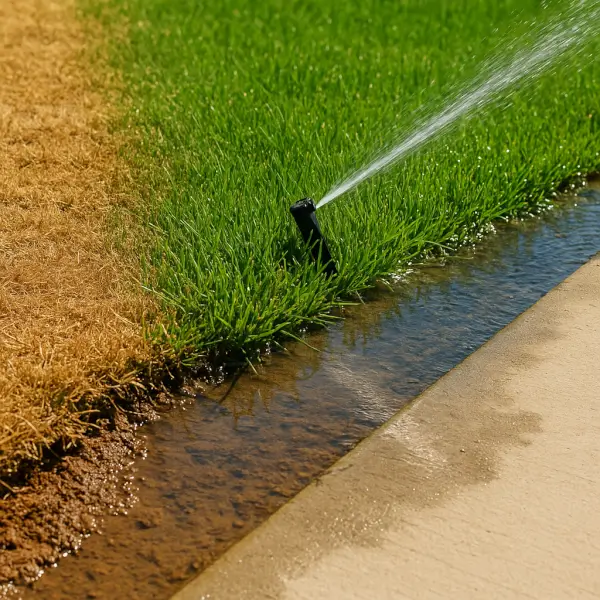
Orangevale homeowners deal with hot summers and strict water schedules that stress lawns and landscapes. Brown patches, high water bills, and runoff in the street all point to the same problem. Your old timer just cannot keep up with the demands of a Sacramento Valley yard.
Smart irrigation controllers in Orangevale, CA give your system the ability to respond to real weather and real soil conditions. This page covers how these controllers work, what to expect from installation, and how to keep your system running well.
You will learn enough to make a confident decision before calling a landscaper. A skilled local pro installs your controller correctly the first time and protects your landscape investment.
Yes, smart irrigation controllers work very well in Orangevale. They read local weather data and adjust watering schedules automatically. This helps yards stay healthy during hot Sacramento Valley summers without wasting water.
Talk to an Orangevale landscaper to find out which controller fits your yard and your budget.
Your yard talks to you every day. You just need to know what to look for. If something feels off with your lawn or plants, your irrigation system is probably the cause. Most Orangevale homeowners notice these problems during the hottest stretch of summer. By then, the damage has already started.
Dry patches that show up even after your sprinklers run tell you that water is not reaching every part of the yard evenly. One zone gets too much while another gets too little. A basic timer cannot fix this because it sends the same amount of water to every zone on a fixed schedule.
Summer water bills that spike without explanation often point to overwatering. Your old controller runs the same program in June as it does in October. It has no way to know that a cool week just passed or that clouds blocked the sun for three days.
Sprinklers running during or right after rainfall waste water and money. A timer does not check the weather. It just follows the clock. Smart controllers skip cycles automatically when rain hits your area. That single feature can save thousands of gallons each year.
Plants showing drought stress and root rot in the same yard signal uneven watering across your zones. Some spots get flooded while others dry out. You also see runoff flowing into the street because water applies faster than your soil can absorb it. Orangevale’s mix of sandy loam and clay soils makes this problem worse. Clay holds water near the surface. Sandy patches drain too fast. A basic timer treats both soil types exactly the same.
Old timer-based controllers were never designed for this kind of variation. They run a fixed schedule no matter what happens outside. A smart controller reads your soil type, your weather, and your plant needs. It adjusts every cycle to match what your yard actually requires that day. That is the difference between guessing and growing.
Not every smart controller fits every yard. The right choice depends on how many zones you have, where your controller box sits, and what features matter most to you. Spending a few minutes on these details now saves you from buying the wrong unit and paying twice.
Start by counting your irrigation zones. Walk your yard and run each station on your current timer one at a time. Most Orangevale homes need an 8- to 16-zone controller. If you have a front lawn, back lawn, side strips, flower beds, and a drip line for trees, you probably land in that range. Pick a controller with a few extra zone slots so you have room to grow later.
Two brands stand out for residential installs in this area:
Both brands have strong contractor support networks. That means replacement parts and warranty service are easy to get right here in the Sacramento Valley. The Irrigation Association sets the certification standards that licensed contractors follow when selecting and installing controllers like these.
Wi-Fi connectivity is not optional anymore. Every model we recommend connects to your home network. You control schedules, check zone status, and get alerts from your phone whether you are at home or on vacation. Setup takes about five minutes through the manufacturer app.
Flow sensor compatibility matters more than most homeowners realize. A flow sensor attaches to your main irrigation line and monitors water volume in real time. If a pipe breaks or a head snaps off, the controller shuts that zone down and sends you an alert. This prevents flooding and protects your water bill.
Finally, check where your controller box sits. If it mounts on an exterior wall or a post near the garage, choose a model rated for outdoor installation. Orangevale summers push past 100 degrees, and winter nights drop below freezing. An outdoor-rated unit handles both extremes without failing.
A little prep work on your end makes installation day faster and smoother. Your technician can focus on the actual install instead of tracking down basic information. Most of these tasks take less than ten minutes total. Here is what to do before your appointment.
Homes in the Orchard area of Orangevale often have older multi-wire controller boxes. These setups use bundled wires instead of individual color-coded runs. If your house was built before the mid-1990s, check whether a wiring diagram is taped inside the controller door. Snap a photo of it and send it to your landscaper before the appointment. This gives the technician time to plan the wire transfer without guessing at terminal assignments on installation day. Missing diagrams add troubleshooting time that you can avoid with one quick photo.
Knowing what happens on installation day removes all the guesswork. You do not need to hover or supervise. Your technician follows a clear process from start to finish. Here is exactly how it goes when we install a smart irrigation controller at your Orangevale home.
The technician starts by removing the old controller from the wall or pedestal mount. Before disconnecting a single wire, they photograph every connection inside the box. This photo serves as a backup map of your entire wiring layout. If your old unit had labels, the tech records those too. Nothing gets left to memory. Every detail goes on camera so the transfer to the new unit is clean and accurate.
Next comes the wire-by-wire transfer. The technician labels each wire with a numbered tag that matches your zone layout. One at a time, each wire moves from the old terminal to the correct terminal on the new smart controller. This step takes the most care. A single wire on the wrong terminal sends water to the wrong zone or leaves a zone completely dead. Labeling and photographing first prevents that from happening.
Once all wires are connected, the technician powers up the new controller. They run every zone by hand, one station at a time. While each zone runs, the tech walks the yard and watches for proper head rotation, spray coverage, and water pressure. Any broken heads, stuck valves, or pressure drops get flagged right away. You get a full picture of your system health before the install wraps up.
Your phone pairs with the controller next. The technician opens the manufacturer app, connects the unit to your Wi-Fi network, and walks you through the main screens. You see how to start and stop zones, change schedules, and read water usage data. By the time this step finishes, you can control your entire sprinkler system from anywhere.
The final step is programming your baseline watering schedule. Your technician sets run times for each zone based on your plant types, sun exposure, and soil conditions. Turf zones get different timing than drip zones for shrubs or flower beds. Orangevale’s mix of clay and sandy loam means soak-and-cycle programs work better than one long watering session. The tech programs those cycles into each zone so water absorbs instead of running off into the street.
Most Orangevale installs finish in two to four hours. A standard 8-zone wall-mount swap runs closer to two hours. Larger systems with 12 or more zones take longer. Pedestal-mount locations add time because the tech may need to run new conduit or adjust the mounting hardware. Either way, you walk away the same day with a fully programmed smart controller, a working app on your phone, and every zone tested and confirmed.
Your smart controller is installed and running. The job is not done yet. The first week after installation is your window to catch small problems before they become big ones. Orangevale’s summer temperatures can exceed 100 degrees. At that heat, a missed zone or a broken head damages turf in just a few days. Take these steps during your first week to protect every square foot of your yard.
Walk each zone while it runs. Start the first station from your app and head outside. Watch every sprinkler head for full rotation and even spray. Look for heads that tilt sideways, spray into fences, or barely pop above the grass. Check for dry spots between heads where coverage gaps leave turf exposed. Move to the next zone and repeat. This full walkthrough takes about 20 minutes for most Orangevale yards. Do it in the early morning when water patterns show up clearly on dry ground.
Open the app later that same day and check whether weather-based adjustments are activating. Your controller pulls data from local weather stations in the Sacramento Valley. On a cooler day, run times should drop automatically. On a triple-digit day, they should increase. If every zone shows the exact same run time regardless of temperature, the weather connection may not be synced. Tap into the settings and confirm the controller has your correct zip code and an active weather data link.
Wait for the next rainfall event. Even a light rain should trigger the rain skip feature. After it rains, open the app and look for a skip notification or a canceled watering cycle. If your system ran right through the rain, the rain sensor setting may be turned off or set to too high a threshold. Adjust it so the controller skips cycles after any measurable rainfall in your area.
After one full week of operation, pull up the water usage report in your app. Most smart controller apps track gallons or minutes per zone per day. Compare your zones side by side.
Call your landscaper back if anything looks wrong. A zone with zero run time means that section of your yard gets no water at all. Full pressure loss on a zone usually means a cracked pipe or a failed valve. These problems are simple to fix right after installation when the tech already knows your system layout. Waiting weeks makes diagnosis harder and gives the damage time to spread.
Your smart controller gives you more data than any old timer ever could. Use that data during week one. Read the reports. Walk the yard. Check the app daily. This short effort locks in the results you paid for and keeps your Orangevale landscape healthy through the hottest months of the year.
Your smart controller does a lot of the thinking for you. But it still needs regular attention to perform at its best year after year. A few simple maintenance tasks protect your investment and keep your water bills low. Skip these steps and small problems quietly grow into expensive repairs.
Firmware updates keep your controller accurate and secure. Manufacturers release updates once or twice a year through their app. These updates improve weather data connections, fix bugs, and sometimes add new features. Open the app every spring and fall to check for available updates. Tap install and let it run. The process takes about five minutes and keeps your controller current with the latest scheduling algorithms.
Sprinkler head inspections belong on your spring checklist every year. Walk each zone and look at every head closely. Grass clippings and dirt clog nozzles over time. Heads tilt from foot traffic, mower strikes, or soil shifting. Worn seals cause heads to leak at the base instead of spraying upward. Replace any head that sprays unevenly or barely pops up. A single clogged head leaves a dry patch that your controller cannot fix with extra run time.
Drip emitter flushing works best in late fall before plant growth slows down. Open the end caps on each drip line and let water run through for two to three minutes. This pushes out sediment and mineral deposits that collect inside the tubing. In the Citrus Heights border neighborhoods near Orangevale, hard water mineral buildup in emitters is especially common. Calcium and lime scale block tiny emitter openings faster than you expect. Seasonal flushing keeps every emitter flowing and every plant fed.
Wiring connections inside the controller box deserve a yearly look. Pull the front panel open and inspect each terminal. Look for green or white corrosion on wire ends and terminal screws. Tighten any loose connections. Corrosion increases electrical resistance, which weakens the signal to your valves. A corroded wire can cause a zone to run short or not open at all. Clean corroded wire tips with a small piece of sandpaper and reconnect them firmly.
Professional tune-ups round out your long-term maintenance plan. Schedule a visit from your landscaper every two to three years. During this visit, the technician recalibrates zone run times based on how your landscape has changed. Trees grow taller and cast more shade. New flower beds replace old lawn sections. Shrubs fill in and need less water than when they were first planted. Your original watering schedule drifts out of alignment as your yard matures. A pro adjusts every zone to match what your landscape looks like today, not what it looked like on installation day.
Pair these tasks together on a simple calendar and your system runs strong for a decade or more. Spring means head inspections and firmware checks. Fall means drip line flushing. Every couple of years, bring in your landscaper for a full recalibration. This routine costs very little time and saves you from surprise repairs, dead zones, and wasted water across every season in Orangevale.
Installing a smart irrigation controller in Orangevale typically takes two to four hours depending on your system size. A standard 8-zone wall-mount replacement runs closer to two hours. Larger systems with 12 or more zones or pedestal-mount setups require additional time for wiring and hardware adjustments. Your technician tests every zone, connects the app to your phone, and programs a custom watering schedule before leaving so you are fully set up the same day.
Yes, rebates for smart irrigation controllers in Orangevale are sometimes available through SMUD and local water agencies in the Sacramento region. Qualifying models that carry EPA WaterSense certification often meet rebate requirements. Rebate amounts and availability change by season and funding levels, so check with your water provider before purchasing. Your installer can recommend controller models that typically qualify and help you gather the documentation needed for a successful rebate application.
A smart controller can work with your existing sprinkler system in most Orangevale homes. These units connect to standard 24-volt sprinkler valves and use the same low-voltage wiring your current timer uses. The technician transfers each wire from the old terminal to the new controller during installation. Whether you have rotor heads, spray heads, or drip lines, the smart controller manages them all. Adding a flow sensor is also possible without replacing any underground piping or valve assemblies.
A smart irrigation controller can save significant water for Orangevale homeowners, often reducing outdoor use by 20 to 50 percent compared to a basic timer. Savings depend on your yard size, plant types, and how much your old schedule was overwatering. The rain skip feature alone prevents thousands of gallons of waste each year. Weather-based adjustments cut run times on cooler days automatically. Soak-and-cycle programming reduces street runoff, which means more water reaches roots instead of flowing into gutters.
Serving: Orangevale, Fair Oaks, Folsom, Roseville, Rocklin, Granite Bay, Citrus Heights, Rancho Cordova, Elk Grove, Auburn, Lincoln, Fairfield, El Dorado Hills, and Beyond