

CA-27 #412296
Since 1980
Local team. No pressure. No spam.
Your lawn turns brown by July, and the water bill keeps climbing. Orangevale homeowners want yards that stay green without wasting water every summer. Native landscape design in Orangevale solves this by matching plants to our hot, dry climate.
We use local plants that thrive on rainfall once their roots take hold. You get curb appeal, lower bills, and a yard that supports birds and bees.
This page walks you through the process, the right plants for our area, and what to expect when you hire a landscaper.
A good native landscape design in Orangevale, CA starts with plants built for our dry foothill climate. Designers pick species that survive on rainfall alone after the first year. These plants also feed local birds, bees, and butterflies.
Your designer matches each plant to your sun, soil, and goals.
Dying patches, rising water bills, and brown spots all point to the same problem. The wrong plants were chosen for your soil, sun, and summer heat. Native landscape design in Orangevale starts with a plan that fits your yard’s real conditions.
Many homes here sit on heavy clay soil. Clay holds water too long and suffocates roots that need fast drainage. Plants from wetter climates simply cannot handle it. That is why so many yards struggle by mid-July.
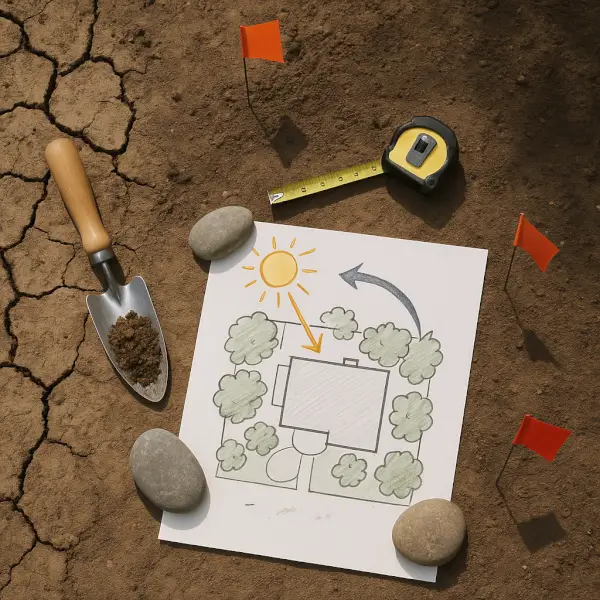
A smart plan starts with a full site walk. We look at how the sun moves across your yard. We check low spots where water pools after a rain. We test soil so we know what plants will actually thrive.
Here is what a strong diagnostic step gives you:
Without this step, you risk buying plants twice. You water more to keep weak plants alive. You watch the same brown patches return year after year.
With this step, your yard is built for Orangevale from day one. Plants go in where they belong. Water reaches roots that can use it. Your design works with the climate instead of against it.
You stop guessing and start growing a yard that holds up through every hot, dry summer ahead.
If you are weighing a green grass lawn against a native yard, the math favors natives. Orangevale sits in Sacramento County, where summer water rules often limit how often you can run sprinklers. A traditional lawn fights that reality every single year.
Native plants use up to 75 percent less water than a standard grass lawn. They are built for our dry foothill summers and clay-heavy soils. That means lower water bills and far less stress when restrictions hit in July and August.
Traditional lawns also demand constant attention. You mow weekly, fertilize each season, and run sprinklers several times a week just to keep the green color. A native yard skips most of that work after the first year.
Here is how the two options compare side by side:
Traditional Lawn | Native Landscape |
Weekly mowing all summer | Light pruning a few times a year |
Heavy irrigation needed | Little to no water after year one |
Fertilizer and chemicals | No fertilizer needed |
Attracts few pollinators | Feeds birds, bees, and butterflies |
Looks the same year-round | Seasonal blooms and color |
Native landscapes also support the local food web. Research from the Xerces Society on plants for pollinators shows native plants feed pollinators and songbirds that lawns simply cannot. You get a yard that hums with life from spring through fall.
The curb appeal pays off too. A thoughtful native design can lift your property value and make your home stand out on the block. You spend less, work less, and get more beauty in return.
A little prep on your side makes the whole project faster and cheaper. You will save days of labor and avoid surprise costs once the crew shows up. Here is what we ask Orangevale homeowners to handle first.
Sort Out Permits and HOA Rules Early
Sacramento County may require permits for grading, retaining walls, or major irrigation changes. Call the county before work begins so you know what applies to your lot. Homeowners near the Orangevale Community Center area often sit inside an HOA. Check your HOA rules before removing any front lawn. Some neighborhoods need written approval for plant swaps or hardscape changes.
Clear the Yard So the Crew Can Start Fast
A clean site lets your landscaper start design work right away. Handle these tasks in the weeks before your start date:
Lock In Your Vision Before the First Meeting
Think about how you want to use your yard. Do you want a pollinator garden buzzing with bees? A fire-wise yard with low fuel loads? A shady retreat with native oaks and seating? A clear vision helps us match plants and layout to your goals.
Get the Plan in Writing
Always ask for a written design plan and timeline before any digging starts. The plan should list plant species, irrigation details, and a clear schedule. This protects you and keeps everyone on the same page.
A solid build follows the same order every time. You get a yard that looks great and works hard from the start. Here is what the process looks like once you hire a crew.
Most Orangevale crews schedule heavy planting in October and November. Fall rains help roots settle in before the first hot summer. That timing gives your new yard the best shot at a strong start.
Once your new yard is planted, you want proof it is thriving. The good news is that a healthy native landscape gives you clear signals in the first few months. You do not need to guess if your project was money well spent.
Watch for these signs in the first season:
Plant color is one of the easiest signs to read. Leaves should look firm and bright, not droopy or yellow. A little leaf drop right after planting is normal as roots settle in. After that, steady new growth means the plant is happy in your soil.
Wildlife activity is another strong sign. Native plants feed local insects and birds in ways imported plants never can. When you see hummingbirds at your sage or bees on your buckwheat, your yard is doing its real job.
In the Fair Oaks Boulevard corridor near Orangevale, homeowners have reported major water savings after their first full summer with native plants. That kind of result is normal when the design fits the climate. If you notice these signs in your own yard, your investment is paying off.
Your native yard is an investment, and a few simple habits protect it for decades. Orangevale summers run long and hot, so small steps each season pay off in big ways. The good news is that native plants ask very little once they settle in.
Here is what we recommend for your yearly care routine:
Of all these steps, mulching is the single most important habit for Orangevale homeowners. Our long, dry summers pull moisture out of the soil fast. A deep three-inch layer of wood chip mulch slows that loss and keeps roots cool.
Spring weeding matters too. Weeds compete with your natives for water, sun, and nutrients. Pulling them young is much easier than fighting them in July.
We also suggest watching your plants through each season. Healthy native shrubs hold their leaves, bloom on schedule, and bounce back after heat waves. If something looks off, call your landscaper early. A quick fix in May beats a full replacement in August every time.
Native landscape design in Orangevale typically ranges from about 1,500 dollars for a small front yard plan to 8,000 dollars or more for a full property design and install. Pricing depends on lot size, soil prep needs, drip irrigation, hardscape features, and plant quantities. Most designers offer a paid consultation that credits toward the final project. Ask for a written estimate that breaks out design fees, plant costs, labor, and irrigation so you can compare bids fairly before signing a contract.
A native landscape project in Orangevale usually takes six to twelve weeks from first design meeting to final planting. The design phase runs two to four weeks for site analysis, soil testing, and a scaled plan. Permits, HOA approval, and material ordering add another two to three weeks. Actual install, including turf removal, soil prep, drip irrigation, and planting, typically runs one to two weeks. Many crews aim to finish planting in October or November so fall rains help roots establish.
The best time to install a native landscape in Orangevale is October through November. Fall planting lets roots settle in during cool weather and benefit from winter rains before the first hot summer. Spring planting in March can also work but requires more hand watering through the dry months. Avoid planting in June, July, or August, when heat stress makes establishment much harder. Plan your design meeting in late summer so install lines up with the ideal fall window.
You do not need to be home during the full native landscape installation in Orangevale, but a few moments of your time help. Plan to walk the yard with your designer at the start to confirm plant placement, irrigation zones, and any last changes. After that, the crew can work independently for most of the project. We recommend being available for the final walkthrough so we can show you the drip system, mulch depth, and care schedule before we wrap up.
Serving: Orangevale, Fair Oaks, Folsom, Roseville, Rocklin, Granite Bay, Citrus Heights, Rancho Cordova, Elk Grove, Auburn, Lincoln, Fairfield, El Dorado Hills, and Beyond