

CA-27 #412296
Since 1980
Local team. No pressure. No spam.
Orangevale homeowners want outdoor spaces that look great day and night. The right accent and uplighting in Orangevale turns plain trees, walls, and walkways into a yard you are proud to show off after sunset.
You will learn how to pick the right fixtures, avoid common placement mistakes, and keep your system running well for years. Good lighting takes planning, the right gear, and careful aiming.
This page covers your options, the install process, and what to expect from a licensed landscaper who knows local soil, plants, and code rules.
Most low-voltage accent and uplighting in Orangevale does not need a permit. Line-voltage systems that tie into your main electrical panel almost always require one. Check with Sacramento County before any wired outdoor lighting project begins.
Permit rules change often, so confirm current requirements before any work begins.
Every yard has hidden stars that only show up after sunset. Your job is to spot them before the crew arrives. Walk your property at dusk and notice what catches your eye. Those are the features worth lighting.
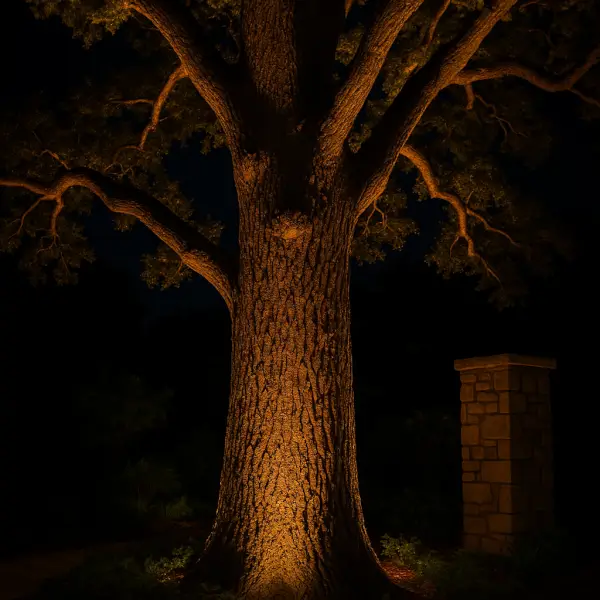
Orangevale yards have something most cities envy. Mature oaks and tall pines respond beautifully to narrow-beam uplighting from the ground. The light climbs the trunk and shows off the canopy against the night sky. That single effect can change how your whole yard feels.
Here are the features that benefit most from accent and uplighting in Orangevale:
Not every feature deserves the same attention. Some yards have one statement oak that should anchor the whole design. Other yards have a long fence line of shrubs that look better with even, low-level wash lighting.
A professional site walk helps you see which features deserve the most light focus. We point out what to highlight and what to leave dark on purpose. Good lighting design uses shadow as much as it uses light. The contrast is what makes your yard feel layered instead of flat.
Take notes on a phone or paper before your contractor visit. Your input shapes the final plan.
When you start planning accent lights, the first big choice is voltage. Low-voltage systems run on 12 volts and pair with LED bulbs. Line-voltage systems run on the same 120 volts as your indoor outlets. For most Orangevale homes, low voltage wins on cost, safety, and flexibility.
Orangevale summers push electricity bills higher every year. Low-voltage LEDs sip power and keep your monthly costs down all season long. That savings adds up fast when your lights run four to six hours every night.
Here is how the two options compare side by side:
Low Voltage | Line Voltage |
Uses 12 volts and LED bulbs | Uses 120 volts from your panel |
Safe to bury at shallow depth | Must run in conduit at code depth |
No permit needed in most cases | Permit and electrician required |
Easy to move or adjust later | Hard to relocate once installed |
LED bulbs last 25 times longer than halogen | Higher heat output shortens bulb life |
Low-voltage wire is safer to bury and easier for your landscaper to move later. If you add a new tree or change a bed, we can shift fixtures without tearing up the yard. Line-voltage systems deliver stronger light, but they cost more to run and demand a licensed electrician for every change.
Most front yard and backyard accent jobs in residential areas work great with low voltage. The light output from modern LED fixtures rivals older halogens at a fraction of the wattage. You get the same warm glow on your oaks, walls, and walkways without the high bill.
For nearly every Orangevale yard we light, low voltage is the smart pick.
A little prep work on your end makes the whole install go faster. You get better results when the crew can focus on lighting instead of moving clutter. Here is how to set yourself up for a smooth day.
Before the crew arrives, walk your yard and clear out anything in the work zones. That means hoses, toys, patio furniture, planters, and yard tools. Open side gates so the team can reach the back without carrying gear through your house.
Next, mark anything buried in your soil. Irrigation lines, low-voltage cables, and septic components all need to stay protected. If you do not know where they run, share your old install plans or call 811 ahead of time.
Decide what you want lit before the contractor shows up. Snap photos during the day of trees, walls, or features you love. A few simple sketches or pinned inspiration photos save hours of back-and-forth on install day.
Here are a few quick questions worth asking your installer up front:
Most standard residential installs in Orangevale finish in one full workday. Plan to be home for the start and the nighttime aiming session at the end.
If you live in the Fair Oaks Village area, talk to your neighbors before the crew digs. Shared fence lines are common here, and a quick conversation prevents surprises. Confirm your property boundaries on paper so trenching stays on your side every time.
Install day is where careful planning turns into a finished look you can enjoy every night. Our crew works in a clear order so each fixture earns its place in your yard. You will see steady progress from layout to final aim.
Here is how a professional install unfolds in your yard:
Orangevale soil brings one extra step worth knowing about. The clay-heavy ground here holds water and shifts with the seasons. After trenching, we compact the soil in layers around every fixture post. This stops your uplights from leaning or tipping six months later. It also keeps the wire path stable through wet winters and dry summers.
Every step above protects your investment and keeps the design looking sharp. You get clean beams, hidden wires, and fixtures that stay put for years. By the time we pack up, your yard is already set for its first full night of light.
The walkthrough is your chance to see the finished work in real conditions. We meet you after sunset and walk the yard together. You see each fixture lit, aimed, and working before we call the job done.
This is the moment to speak up about anything that looks off. A small angle change or brightness tweak can make a big difference. We make those adjustments on the spot while we are still on site.
Here is what we check together during your nighttime walkthrough:
Some Orangevale homes sit near HOA neighborhoods in Citrus Heights with rules on light color and brightness. We verify your system meets those guidelines before we leave. That step protects you from warning letters later.
We also show you how to make small changes yourself. You learn how to adjust a fixture head, swap a bulb, and reset the timer after a power outage. These quick skills save you a service call for simple fixes.
By the end of the walkthrough, you know your system inside and out. Every light hits its target and the controls work the way you expect.
A small amount of upkeep protects the money you spent on your lighting system. Most maintenance tasks take less than an hour and need only basic tools. Build these habits into your seasonal yard routine and your fixtures will look sharp for years.
Start with the lenses. Dirt, spider webs, and hard water spots dim the light fast. Wipe each lens with a soft cloth and mild soap twice a year. You will be surprised how much brighter the yard looks right after.
Each spring, open your transformer and check the wire connections. Loose or corroded terminals cause flickering and dead zones. Tighten any screws and look for green buildup on the copper. This quick check matters most before the long Orangevale dry season hits.
Fixtures also shift over time. Rain softens soil, lawn crews bump posts, and dogs knock spotlights sideways. Walk the yard after dark every few months and straighten anything pointing the wrong way.
Keep this short checklist handy:
Burned-out bulbs throw off the whole design. One dark tree or column makes the rest of the yard look unfinished. Replace LEDs as soon as you notice them out.
A professional tune-up every one to two years catches wiring problems before they spread. We test voltage at each fixture and find weak spots early.
One last tip for our climate. Orangevale heat and UV exposure crack cheap plastic housings within a few seasons. Choose brass or aluminum fixtures from the start for a system that lasts.
Professional accent and uplighting in Orangevale typically ranges from about 2,500 to 8,000 dollars for a full residential design and install. The final price depends on fixture count, brass or aluminum quality, transformer size, and the length of wire runs across your yard. Smaller front yard packages start lower, while larger backyards with multiple zones, smart controls, and tree work cost more. We provide a detailed written quote after a site walk so you see every line item before you commit.
Most accent lighting installations finish in one full workday from start to finish. The crew arrives in the morning to stage fixtures, mount the transformer, trench wire, and set each light during daylight. We return after sunset the same evening for the aiming session and nighttime walkthrough. Larger properties with extensive trenching or smart control integration may stretch into a second day. We confirm the exact timeline during your quote so you can plan to be home for the test.
Yes, we offer a warranty on every accent lighting system we install in Orangevale. Brass and aluminum fixtures from our preferred manufacturers carry lifetime warranties against corrosion and finish failure. LED bulbs are covered for the rated lifespan, typically 15 to 25 years. Our installation workmanship is warrantied for two years, which covers wire connections, transformer wiring, and fixture stability. We hand you all paperwork at the walkthrough and stay reachable for any warranty claim down the road.
Yes, we can absolutely add to or redesign an existing lighting system you already own. Our team starts with a full inspection of your current transformer, wire runs, and fixtures to see what is worth keeping. Low-voltage systems are easy to expand when the transformer has spare capacity. If your old halogens are failing, we can swap them for matching LED heads while keeping the wire path. We also retrofit aging plastic fixtures with brass replacements for a longer lasting result.
Serving: Orangevale, Fair Oaks, Folsom, Roseville, Rocklin, Granite Bay, Citrus Heights, Rancho Cordova, Elk Grove, Auburn, Lincoln, Fairfield, El Dorado Hills, and Beyond