

CA-27 #412296
Since 1980
Local team. No pressure. No spam.
Your pool should be the best part of your yard. Too many Orangevale homeowners deal with cracked concrete, messy plants, and a pool deck that feels too hot to walk on. Pool landscaping in Orangevale, CA changes all of that.
The right plants, hardscape materials, and layout make your pool area safer and more inviting. You get shade where you need it, clean water with less skimming, and a space that looks finished.
Below you will find the options, steps, and details that help you plan a pool landscape that fits your home and your budget.
Orangevale has hot, dry summers and mild winters. These conditions favor drought-tolerant plants and heat-resistant hardscape materials. Choosing the right plants keeps your pool area looking great with less water.
Smart plant and material choices matched to local conditions give your pool landscape a longer life with less work.
You built or bought your pool to relax and cool off. But if your pool yard has not been landscaped well, it creates problems you deal with every single day. Orangevale summers regularly top 100 degrees. A bare or poorly designed pool area becomes uncomfortable and hard to use during the months you want to enjoy it most.
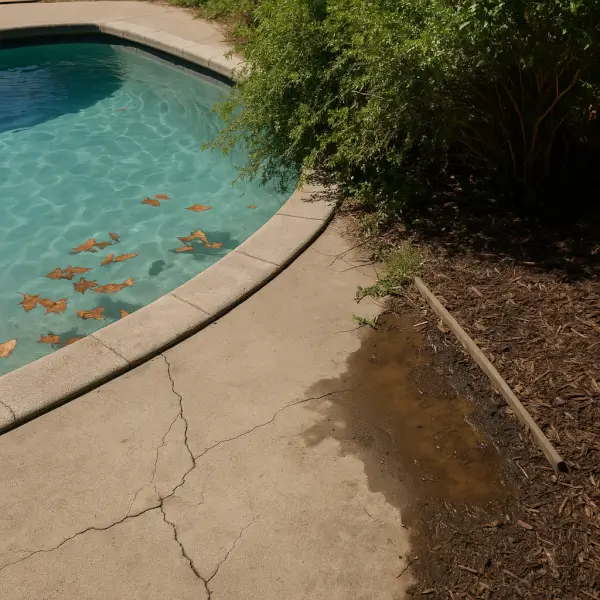
Bare concrete decks cause two big headaches. They get slippery when wet, which is a safety risk for kids and guests. They also crack and chip under the intense summer heat, leaving sharp edges near bare feet.
Overgrown or wrong plants are one of the most common issues we see. Trees and shrubs planted too close to the pool drop leaves, seeds, and flowers into the water. You end up skimming constantly, and your pool filter works overtime. Some root systems even push into plumbing lines over the years.
Poor drainage turns your pool deck into a muddy mess after any rainfall. Standing water collects near the pool edge and creates slippery patches. It also attracts mosquitoes during the warmer months.
No shade anywhere on the deck means nobody wants to sit outside past 11 a.m. in July. You spend more on sunscreen than pool chemicals. Without a single shade tree or pergola, the concrete surface can reach temperatures above 150 degrees on peak summer days.
Missing borders and edging make the whole area look unfinished. Mulch washes into the pool. Dirt blends into the deck. Planting zones have no clear separation from walkways. The pool yard feels like a work in progress rather than a backyard retreat.
Every one of these problems has a fix. The right combination of grading, plant selection, hardscape, and edging turns a frustrating pool yard into a space you actually want to use. Recognizing what is wrong with your current setup is the first step toward a pool landscape that works for your family all year long.
You might save money up front by doing pool landscaping yourself. But the mistakes that come with a DIY approach often cost more to fix than hiring a pro from the start. In the Orangevale area, local landscapers know which materials hold up best through the region’s extreme summer heat and occasional freeze cycles. That knowledge alone saves you from expensive replacements down the road.
A licensed landscaper brings real advantages to your pool project:
Landscape design principles from leading horticultural research confirm that proper plant spacing and material selection extend the life of any outdoor project. A trained landscaper applies these principles to your yard every day.
Hiring a professional is not just about convenience. It is about getting a pool landscape that looks great, functions properly, and lasts for years without constant repairs. The investment pays for itself in fewer problems and more time spent enjoying your backyard.
A little preparation before your project starts saves time, money, and headaches once the crew arrives. If this is your first pool landscaping project, these steps keep everything on track from day one. Homeowners along the Hazel Avenue corridor in Orangevale should pay extra attention to prep work. Many of those neighborhoods have older underground irrigation lines that need to be located before anyone puts a shovel in the ground.
Spending a weekend on these five steps puts you ahead of most homeowners. Your landscaper can start faster, work more efficiently, and deliver a result that matches what you actually want for your pool area.
Knowing what happens during your project removes the guesswork and helps you plan around the work. A professional pool landscaping crew follows a set order of steps. Each phase builds on the one before it. Most Orangevale pool landscaping projects take one to three weeks depending on yard size and material delivery schedules.
The process starts with the ground itself. Your crew grades the soil around the pool so water flows away from the edge and toward proper drainage points. This step prevents puddles, mud, and water damage to your pool shell. On properties with clay-heavy soil, grading takes extra care because the ground does not absorb water quickly. The crew may add French drains or catch basins if your yard needs help moving water during winter storms.
Hardscape installation comes next. Pavers, flagstone, or poured concrete go down around the pool deck area first. Your landscaper sets a compacted base layer, then places each material on top with proper spacing and slope. This layer gives the entire project its foundation. Rushing hardscape work leads to shifting, cracking, and uneven surfaces within a year or two.
Once the hard surfaces are locked in, the crew installs landscape borders, edging, and any retaining walls. These elements separate your planting beds from walkways and the pool deck. They keep mulch, soil, and gravel where they belong. Clean borders also make the finished yard look polished and intentional rather than random.
Planting happens after all the hardscape and borders are set. Your landscaper places each shrub, tree, and ground cover based on three things: how much sun that spot gets, how much water the plant needs, and how close it sits to the pool. Plants that drop heavy leaves or sticky flowers stay farther back. Low-litter species go near the water line.
The final phase ties everything together. The crew connects drip irrigation or low-flow sprinkler lines to your existing water system. Each zone gets tested to confirm full coverage of every new plant. After irrigation checks pass, the team spreads mulch, cleans up all construction debris, and walks you through the finished space. You see exactly where every valve sits and how to adjust your watering schedule for the new layout.
Your pool landscaping project looks done. The crew is packing up tools and loading the truck. Before you sign off and make that final payment, take time to inspect the work yourself. A careful walkthrough catches small issues while the crew is still on site and can fix them at no extra cost. In the Citrus Heights and Orangevale border areas, final grade checks matter even more because the naturally uneven terrain can hide drainage problems that only show up after the first rain.
Start at one corner of the pool yard and walk the full perimeter. Check every section of edging and border material along the way. Press down on each piece with your foot. Edging should feel solid and sit level with the surrounding surfaces. If a section rocks, tilts, or has gaps underneath, ask the crew to reset it before they leave. Loose edging shifts quickly once foot traffic and irrigation water hit it regularly.
Turn on your irrigation system and run a full cycle through every zone. Stand near each new planting bed and watch the water reach every plant. Look for dry spots, blocked emitters, and heads that spray onto the pool deck instead of into the soil. A five-minute test now prevents dead plants and wasted water next month.
Walk slowly along the pool edge and look for any low spots in the deck or surrounding ground. Get down to eye level if you need to. Water will collect in these dips after a rain event or heavy watering cycle. Standing water near your pool creates slip hazards and can damage the pool shell over time. Point out any low areas to your landscaper so they can add fill or adjust the grade.
Check the distance between every new plant and the pool water line. Shrubs and trees planted too close will drop leaves, petals, and seeds directly into the water. Ask your landscaper to confirm that each plant sits far enough back to keep debris out of the pool as it grows to full size. Remember that a small shrub today becomes a much larger plant in two or three years.
Before the crew leaves, ask for written warranty details covering plants, hardscape, and irrigation work. Find out what the warranty covers and for how long. Ask about follow-up care during the first 90 days. Many landscapers offer one or two check-in visits to adjust irrigation, replace plants that did not take root, and tighten any edging that settled. Get these details in writing so both sides know what to expect going forward.
Your pool landscape looked perfect the day the crew finished. Keeping it that way does not take a lot of effort. It takes the right habits at the right times of year. A few hours of seasonal care protects the thousands of dollars you put into your yard and keeps your pool area looking sharp for seven years or more.
Trim shrubs and trees twice a year. Schedule one trim in early spring and another in late fall. This keeps branches from growing over the pool and dropping leaves, seed pods, or flowers into the water. Overgrown plants also block airflow, which encourages mildew on nearby hardscape surfaces. A clean trim line gives the whole yard a polished look without a full redesign.
Reapply polymeric sand every two to three years. The sand between your pavers locks each piece in place and stops weeds from pushing through the joints. Rain, foot traffic, and pool splash gradually wash it out. When you notice gaps forming between pavers, it is time to sweep in a fresh layer and mist it to activate the binding agents.
Check drip irrigation emitters each spring. Before the hot season hits Orangevale, turn on each zone and inspect every emitter by hand. Mineral buildup and dirt clog small openings over the winter. A blocked emitter means a dead plant by July. Replacing a 50-cent emitter is a lot cheaper than replacing a mature shrub.
Replace mulch in planting beds once a year. A fresh two-inch layer of mulch holds moisture in the soil and shields roots from triple-digit surface temperatures. Old mulch breaks down, thins out, and loses its ability to insulate. Spread new mulch each spring before the heat arrives.
Reseal stone and concrete decking every few years. Sun, chlorine splash, and temperature swings break down surface sealant over time. Unsealed decking absorbs stains, develops hairline cracks, and loses its color. A fresh coat of sealant keeps your deck looking new and adds a layer of slip resistance around the pool.
Orangevale’s clay-heavy soil adds one more task to your list. Clay expands when wet and shrinks when dry. This cycle pushes pavers out of alignment and loosens edging along planting beds. Walk your pool perimeter once a year and look for any sections that have shifted, sunk, or lifted. Catching settling early means a simple reset instead of a full hardscape repair.
Pool landscaping cost in Orangevale depends on yard size, materials, and project scope. Most residential pool landscaping projects in the area range from $5,000 to $25,000 or more. Simpler upgrades like new edging, mulch, and a few drought-tolerant plantings fall on the lower end. Full redesigns that include new pavers, grading, drainage, irrigation, and mature plants land at the higher end. Sharing a budget range with your landscaper early helps them build a design that fits your goals without unexpected costs.
The best time to start a pool landscaping project in Orangevale is late winter through early spring, typically February through April. Starting during this window gives new plants time to establish roots before triple-digit summer temperatures arrive. Hardscape materials also set and cure better in moderate weather. Landscaping crews tend to have more availability before the busy summer season, so you may get your project scheduled faster and completed sooner, leaving you with a finished pool area by the time warm weather hits.
A professional pool landscaping project typically takes one to three weeks to complete in Orangevale. The timeline depends on factors like yard size, material availability, and the complexity of grading or drainage work required. Smaller projects focused on planting and edging may wrap up in a week. Larger projects involving new pavers, retaining walls, French drains, and full irrigation systems take closer to three weeks. Your landscaper should provide a projected timeline during the design consultation so you can plan around the work.
Whether you need a permit for pool landscaping in Orangevale depends on the scope of work. Basic planting, mulching, and edging typically do not require permits from Sacramento County. However, projects that involve retaining walls above a certain height, significant grading changes, or new drainage lines often do require a permit before construction begins. Your landscaper can check requirements on your behalf. Skipping required permits can result in fines or orders to remove completed work, so it is worth confirming before the project starts.
Serving: Orangevale, Fair Oaks, Folsom, Roseville, Rocklin, Granite Bay, Citrus Heights, Rancho Cordova, Elk Grove, Auburn, Lincoln, Fairfield, El Dorado Hills, and Beyond