
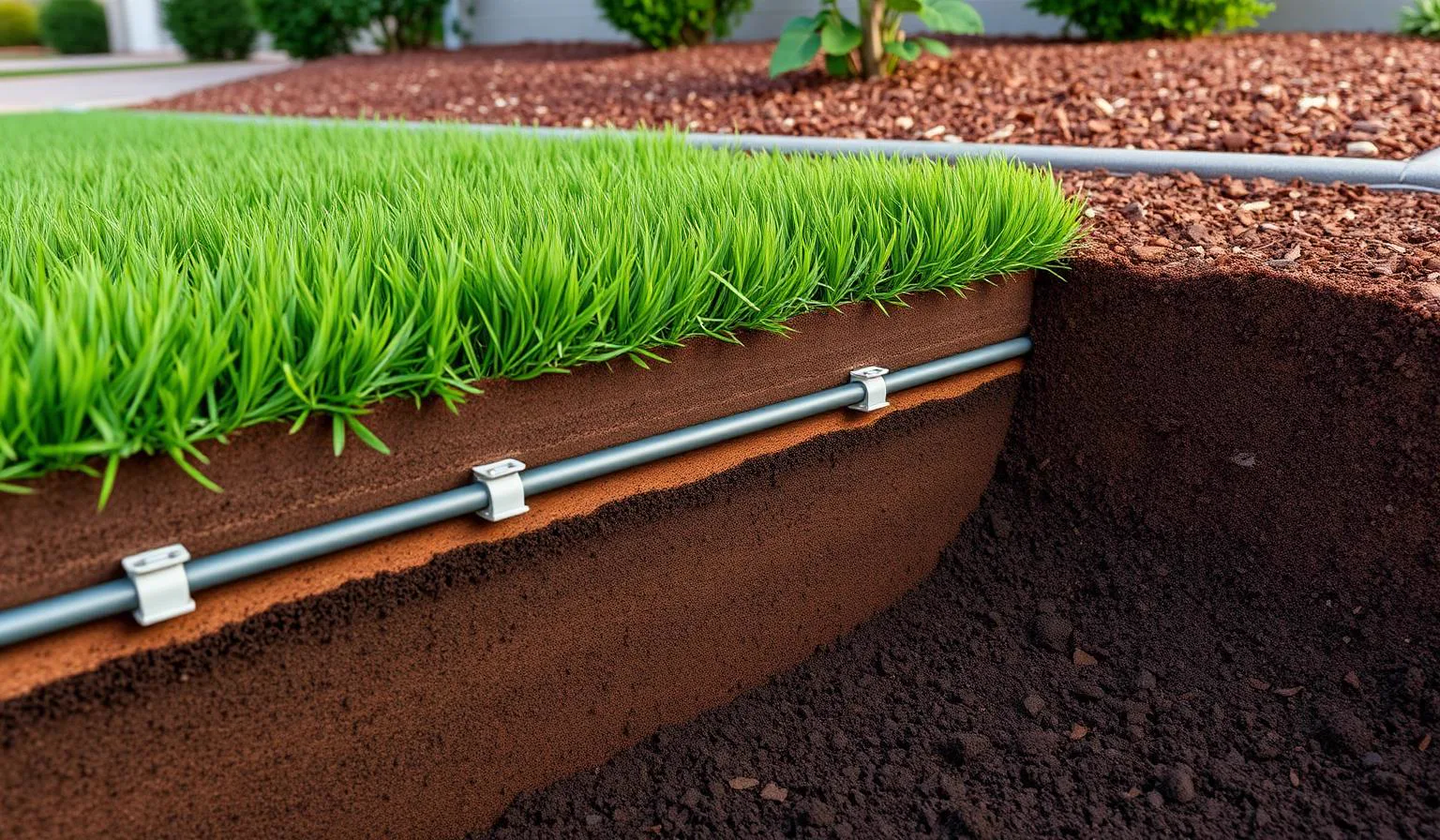
Subsurface Irrigation Systems in Orangevale, CA
Cut Your Water Bill and Grow a Greener Yard
Our buried drip system feeds roots directly and skips wasted evaporation.
No obligation. Licensed CA landscape contractor.
Signs Your Orangevale Yard Needs a Subsurface Irrigation System
Orangevale summers regularly push past 100 degrees, which means surface evaporation steals water before roots can drink. If you see these warning signs, a subsurface system may be the right fix.
- Dry, brown spots keep showing up even after a full watering cycle finishes
- Water bills climb month after month, but your plants still look weak and thirsty
- Runoff streams flow off your lawn onto sidewalks, driveways, and gutters
- Weeds outpace flowers because surface moisture feeds shallow weed roots first
- Root rot or fungus spreads in patches where surface water sits unevenly
Each problem points back to the same cause. Surface watering loses too much to heat, wind, and runoff before it reaches the root zone. Sloped yards in Orangevale make this worse because water rolls downhill before it soaks in.
Why Orangevale Homeowners Choose Subsurface Over Sprinklers
| Sprinkler Systems | Subsurface Irrigation |
|---|---|
| Sprays water above ground | Releases water below the surface |
| Loses water to wind and sun | Sends water straight to roots |
| Spray heads break easily | No exposed parts to damage |
| Wets leaves and blooms | Keeps foliage dry and healthy |
| Loud and visible during cycles | Runs quietly and out of sight |
- Lower water bills because almost every drop reaches a root, not the sidewalk
- Stronger plants that grow deeper roots searching for steady underground moisture
- Fewer repairs since mowers and foot traffic cannot snap off spray heads
- Less disease because dry leaves stop mold and fungus from spreading
Orangevale shares water district rules with nearby Fair Oaks, and both reward homeowners who pick low-water landscaping. See this EPA WaterSense landscaping guide for more on efficient watering practices.
How to Prepare Your Property for Installation
- Call 811 for utility marking a few days before any digging starts
- List your priority plants and zones, marking spots that go brown fastest
- Clear rocks, debris, and obstacles from the trenching path
- Confirm Orangevale water district rules and current watering windows
- Verify permit needs with your landscaper in writing before install day
What Happens During a Professional Installation
- Yard mapping and zone marking based on plant type, sun exposure, and water needs
- Trenching and line burial six to twelve inches deep based on soil and planting
- Emitter spacing tuned to your soil type: sandy needs closer, clay needs wider
- Main connections for timer, filter, and backflow preventer at your water supply
- Pressure testing every emitter before any line gets covered
In the Citrus Heights area near Orangevale, clay-heavy soil pockets require deeper line placement for even water spread. We adjust depth on the spot when we hit those zones. Most installs wrap up in one to three days.
Confirming Your New System Is Working Right
Dig a small hole about six inches down a few hours after a watering cycle. The soil should feel evenly moist, not soggy and not bone dry. Healthy plants on a working system show steady green growth, firm leaves, and no wilting between cycles.
- Pull and rinse the filter screen every two to three months to clear sediment
- Walk each zone and look for soft, soggy spots that signal a leak
- Use a soil moisture meter at the root depth of your main plants
- Compare your monthly water bill to last year's same month to track savings
- Listen near the timer during a cycle to confirm valves open and close on schedule
Maintenance That Keeps Your System Lasting for Years
Start every spring with a line flush. Open the end caps and let water run through until it comes out clear. Skipping this step is the top reason systems lose pressure over time.
| When | Task |
|---|---|
| Early spring | Flush lines and test pressure |
| Mid-summer | Check emitter spacing and flow |
| Late fall | Drain lines and winterize valves |
| Every 2-3 years | Book a professional checkup |
Drain the lines and shut off the supply valve before the first hard freeze. Cracked lines from trapped water are one of the most common repair calls we get. With steady care, your system can run well for fifteen to twenty years.
Frequently Asked Questions
All Irrigation & Sprinkler Systems Services in Orangevale
Grow a Greener Yard With Less Water
We design and install buried drip systems sized for your Orangevale yard.
Mon–Fri, 7am–5pm. Licensed CA landscape contractor.